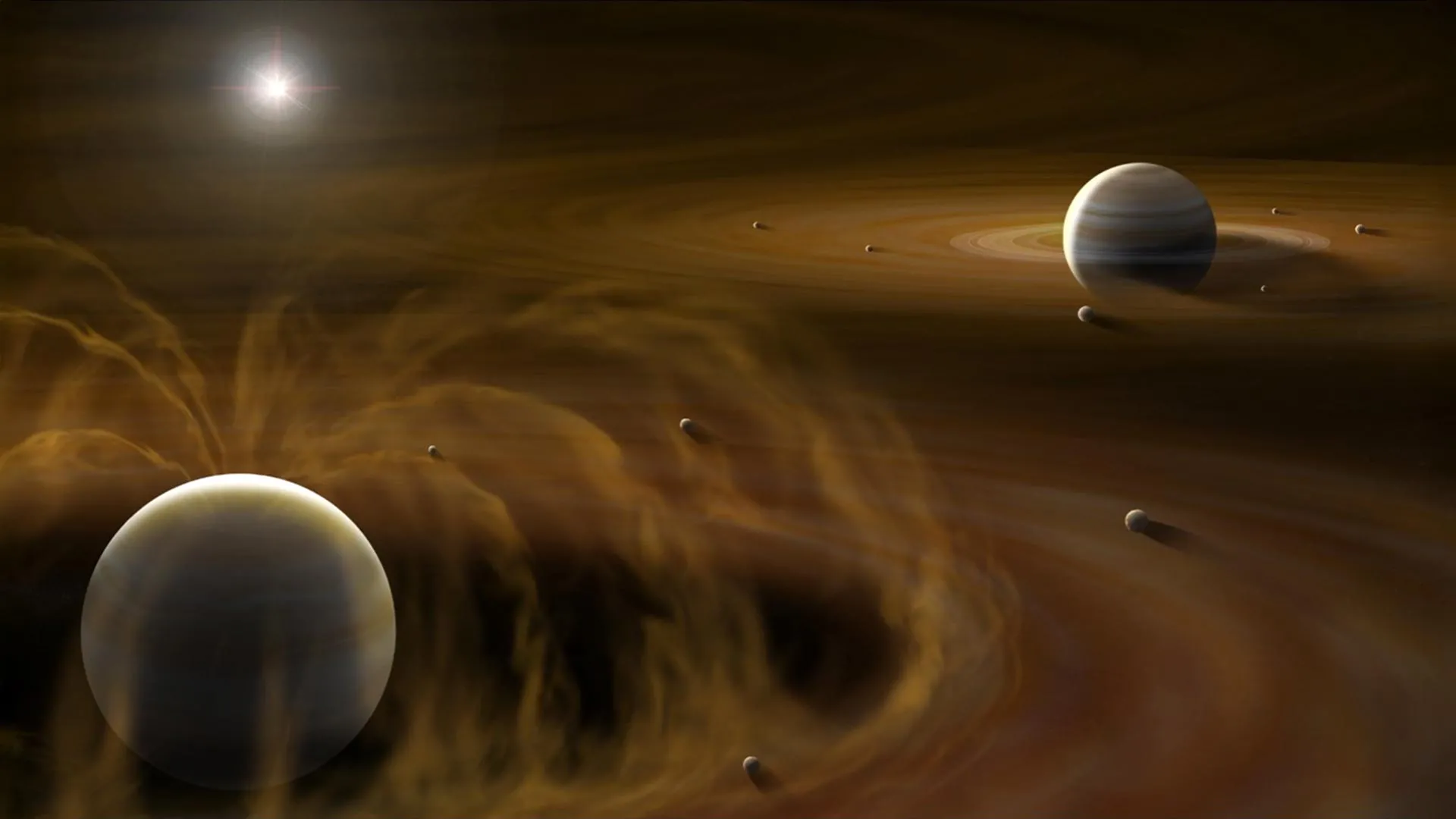
Astronomers are baffled by the discovery of an unusual planetary system surrounding the star LHS 1903, located about 200 light-years from Earth. Dubbed the "inside-out" system, it features a configuration that defies the conventional layout commonly observed in our galaxy. Typically, rocky planets are found closer to their star, while gaseous giants orbit farther out. However, LHS 1903’s planets are arranged like a cosmic double-stuffed Oreo, with two rocky exoplanets sandwiching a pair of gaseous ones.
This peculiar arrangement challenges existing models of planetary formation and migration. Scientists speculate that the system's unique structure could be the result of a complex gravitational dance or a series of colossal cosmic events that shuffled the planets into their current positions. Such an anomaly provides a rare opportunity for astronomers to refine their understanding of how planetary systems evolve over time, potentially offering insights into the diversity of planetary architectures in the universe.
The discovery was made using advanced observational techniques, including precise measurements of the star's light variations. As researchers continue to analyze the data, the LHS 1903 system may reveal further surprises, prompting a reevaluation of theories about planet formation. This intriguing find underscores the vast complexity of the cosmos and reminds us that our understanding of planetary systems is still evolving, with much left to explore and discover.
— Authored by Next24 Live








 English (US)