The James Webb Space Telescope (JWST) has opened a new window into the early universe, uncovering enigmatic phenomena that challenge existing astrophysical theories. Among these discoveries are the ultra-bright "blue monster" galaxies, which shine with a luminosity that defies their age and expected development. These galaxies suggest that the early universe may have been more dynamic and complex than previously thought, prompting scientists to reconsider their models of galactic formation.
Adding to the intrigue are the mysterious "little red dots" scattered throughout the cosmos. Initially perplexing researchers, these dots could represent nascent galaxies or other cosmic structures that played a pivotal role in the universe's evolution. Their unexpected abundance and characteristics have sparked debates about the fundamental processes that governed the early universe, hinting at unknown forces or particles that could have influenced cosmic evolution.
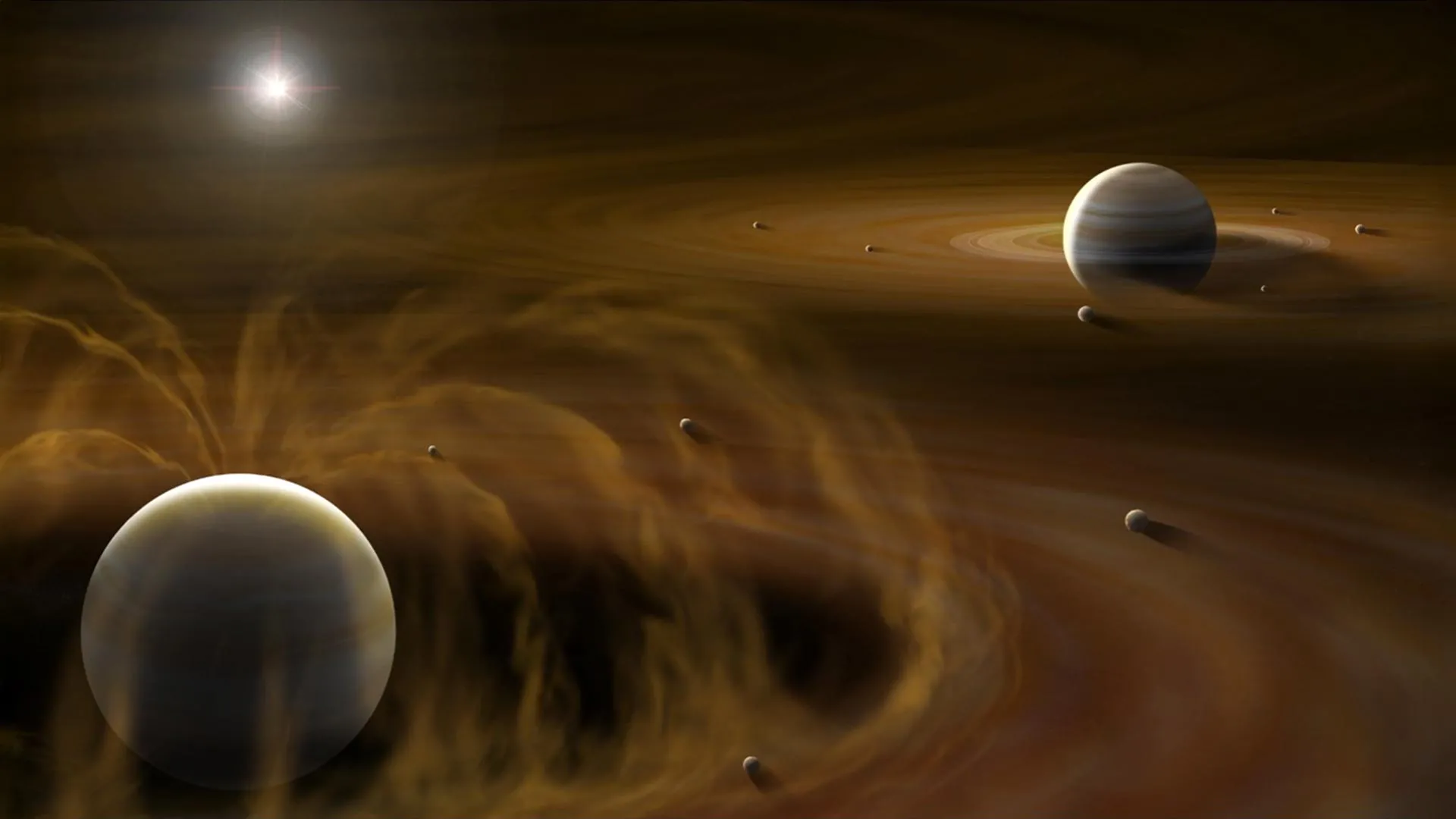
Dark stars, hypothetical objects composed primarily of dark matter, are emerging as potential keys to these mysteries. Unlike traditional stars, dark stars would emit very little light, making them difficult to detect directly. However, their gravitational influence could provide the missing link in understanding the formation of these bizarre cosmic features. By reconciling the presence of dark stars with observations of black holes and other anomalies, scientists hope to unlock new insights into the universe's infancy, reshaping our comprehension of its origins.
— Authored by Next24 Live









 English (US)